CVC short e i review
Master CVC short e and short i minimal pairs like pen, pin, ten, tin, jet, jig, bed, and pig with interactive phonics games and a printable worksheet pack.
Lesson at a glance
Skill
Compare and contrast short e and short i in CVC words
Pattern
mixed consonant-vowel-consonant
Level
Preschool, kindergarten, and grade 1
Practice time
5-10 minutes
The CVC short e and short i review provides targeted discrimination practice for the two most commonly confused vowel phonemes in early reading. By presenting high-contrast minimal pairs—such as pen vs. pin, ten vs. tin, and jet vs. jig—this lesson trains young readers to slow down and isolate the medial vowel rather than guessing from initial consonants.
Students practice with real photograph cards, color-coded sound highlighting, interactive auditory games, and a complete 4-page printable worksheet pack suitable for classroom centers, speech-language therapy, and homeschool practice.
Why short e and short i discrimination is crucial
In early literacy instruction, short e (/ɛ/) and short i (/ɪ/) represent the most persistent vowel substitution error:
- Acoustic Proximity: The formant frequencies of /ɛ/ and /ɪ/ are very close, making them difficult for developing ears to separate without explicit training.
- The "Pin-Pen Merger": In numerous regional English dialects, these two vowels collapse into an identical sound before nasal consonants (/n/ and /m/), creating spelling confusions.
- Orthographic Mapping: Training children on exact minimal pairs (pen vs. pin) forces full left-to-right decoding and secures phoneme-grapheme correspondences in long-term memory.
Tactile and articulatory cues for /ɛ/ vs. /ɪ/
Help students feel the difference in their mouths:
- Short E (/ɛ/ as in pen, ten, jet, bed): The jaw drops to a medium-open position (a "two-finger" opening). The tongue rests in the middle-front of the mouth with relaxed cheeks.
- Short I (/ɪ/ as in pin, tin, jig, pig): The jaw rises slightly (a "one-finger" opening). The tongue arches higher toward the roof of the mouth, creating a subtle, gentle smiling tension at the corners of the lips.
Have students hold a hand mirror or place their fingers under their chin while alternating: "pen... pin... pen... pin".
Five-step classroom teaching routine
- Visual Contrast Warm-up: Place the pen and pin flashcards side by side. Point out the red-highlighted e and i in each word.
- Finger-in-Mouth Jaw Check: Have students test the jaw drop: two fingers for ten, one finger for tin.
- Sound-Tapping & Blending: Tap three fingers on the table (/p/ - /ɛ/ - /n/ vs. /p/ - /ɪ/ - /n/) and blend smoothly.
- Interactive Digital Drills: Open Bitsboard's Photo Touch and Pop Quiz to test rapid recognition with instant auditory feedback.
- Worksheet Reinforcement: Complete the Letter Match and Trace and Write pages from the downloadable 4-page worksheet pack.
Common student mistakes and how to fix them
- Vowel Guessing: When reading fast, students often say pin for pen. Prompt: "Look at the red vowel in the middle. What sound does e make? Now read the whole word."
- Spelling Reversals: In writing, students may write tin when you dictate ten. Have them repeat the word slowly, check their jaw drop, and choose the vowel tile before writing.
- Over-Elongation: Prevent students from stretching short vowels into long vowels (e.g., turning /ɪ/ into /iː/). Keep sounds crisp and clipped.
Five-minute center or home practice routine
- Minute 1: Pair Introduction: Listen to and pronounce the four pairs (pen/pin, ten/tin, jet/jig, bed/pig) on Bitsboard Flashcards.
- Minutes 2–3: Auditory Game: Play Letter Match on Bitsboard to drag the correct vowel (e or i) into the blank slot.
- Minutes 4–5: Workbook Practice: Complete the Draw and Match or Trace and Write activity on the printable worksheet.
Short E And Short I Word List
Use these words across the games and printable worksheet so learners repeat the same sound pattern in multiple ways.
| Word | Target sound | Practice cue |
|---|---|---|
| pen | e | Say pen, stretch the sounds, then read the whole word. |
| pin | i | Say pin, stretch the sounds, then read the whole word. |
| ten | e | Say ten, stretch the sounds, then read the whole word. |
| tin | i | Say tin, stretch the sounds, then read the whole word. |
| jet | e | Say jet, stretch the sounds, then read the whole word. |
| jig | i | Say jig, stretch the sounds, then read the whole word. |
| bed | e | Say bed, stretch the sounds, then read the whole word. |
| pig | i | Say pig, stretch the sounds, then read the whole word. |
Interactive phonics games
Play through the same practice words with picture cards, photo matching, quiz questions, and missing-letter practice.
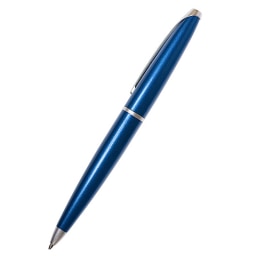
pen
Tap card to see the picture again.
Common questions
Why are short e and short i so easily confused?
Both short e (/ɛ/) and short i (/ɪ/) are front vowels with very close tongue positions and acoustic frequencies. In many dialects (known as the pin-pen merger), these vowels sound nearly identical before nasal consonants like n and m.
How can children feel the difference between short e and short i?
Have students place two fingers sideways between their teeth. For short e (/ɛ/ as in pen), the mouth opens enough to comfortably fit two fingers. For short i (/ɪ/ as in pin), the jaw raises and the teeth close slightly so only one finger fits.
What minimal pairs are included in this review?
This lesson features exact minimal pairs pen/pin and ten/tin, near minimal pairs jet/jig, and high-frequency anchor words bed and pig.
Is the printable worksheet free to download?
Yes, the 4-page PDF worksheet pack is 100% free and includes picture flashcards, letter-fill vowel discrimination, handwriting tracing lines, and drawing matching lines.
Start Learning with Bitsboard
Unlock over 30 interactive mini-games, thousands of pre-made learning boards, and the power to fully customize your own lessons. Perfect for toddlers, students, educators, and speech therapists!
Download on the
App Store