
CVC short a i u review
Review CVC short a, short i, and short u words like bag, big, bug, rag, rip, and rug with interactive games and a printable worksheet.
Lesson at a glance
Skill
Compare short a, short i, and short u in CVC words
Pattern
mixed consonant-vowel-consonant
Level
Preschool, kindergarten, and grade 1
Practice time
5-10 minutes
The CVC short a, short i, and short u review provides focused phonemic and orthographic discrimination practice across three fundamental short vowels in early English reading: short a (/æ/), short i (/ɪ/), and short u (/ʌ/).
Beginning readers frequently stumble when differentiating vowels that share the same onset and rime consonants. Because consonant sounds such as /b/, /r/, and /g/ provide strong articulatory contact (bilabial closure for /b/, tongue retroflexion for /r/, and velar contact for /g/), children easily lock onto the outer shell of the word. A child encountering bug may impulsively blurt out "bag" or "big" unless they have been trained to attend explicitly to the vowel in the middle.
By grouping target vocabulary into structured contrast sets—the exact minimal triplet bag vs. big vs. bug, and the liquid-onset set rag vs. rip vs. rug—this unit eliminates onset guessing. Students must look through the entire word, map each sound to its mouth posture, and verify the medial letter symbol before blending.
Integrating photographic picture cards, vowel-highlighted interactive online games, and a free 4-page printable worksheet pack, this unit provides structured phonics intervention for classrooms, reading resource rooms, speech therapy, and home practice.
How to Teach Short A, I, and U Contrast
Explicit multisensory instruction pairing articulatory feedback with visual sound highlighting helps students build permanent orthographic maps:
- Acoustic Comparison: Say bag, big, and bug clearly. Ask students: "Which word has the wide-open /æ/ sound, which has the narrow-smile /ɪ/ sound, and which has the relaxed sigh /ʌ/ sound?"
- The "Chin Drop, Narrow Smile, and Relaxed Sigh" Mouth Check:
- For short a (/æ/ as in bag, rag): Place two fingers under the chin. The jaw drops wide, and the tongue arches forward near the bottom teeth.
- For short i (/ɪ/ as in big, rip): Touch the corners of the mouth. The lips stretch into a relaxed, narrow smile with the tongue high and forward.
- For short u (/ʌ/ as in bug, rug): The entire jaw and lips relax with zero tension or rounding, exhaling a quiet sigh (/ʌ/).
- Sound Tapping and Segmenting: Tap each phoneme on fingers or push sound chips into Elkonin sound boxes:
- /b/ - /æ/ - /g/ -> bag
- /b/ - /ɪ/ - /g/ -> big
- /b/ - /ʌ/ - /g/ -> bug
- Visual Medial Highlighting: Point directly to the red highlighted vowel letters (a, i, and u) on each card. Reinforce that altering the single letter in the center completely changes the word's pronunciation and meaning.
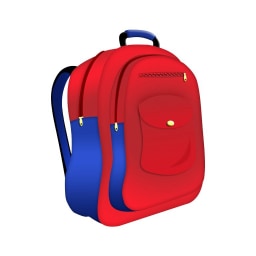
- Photographic Meaning Anchors: Match each decoded word immediately to its photographic image (e.g., a school backpack vs. an enormous elephant vs. a colorful ladybug), cementing the connection between decoding and comprehension.
Common Short A, I, and U Decoding Challenges
- Consonant Shell Guessing: When words share identical consonants (b_g or r_g), impulsive decoders guess the first word that comes to mind. Structured triplets compel students to slow down and verify the medial vowel.
- Auditory and Articulatory Blurring: Because vowels lack the firm tactile contact points of consonants, children with auditory processing delays or dialect variations may blur /æ/ and /ʌ/. Physical jaw-drop checks give learners a concrete physical anchor.
- Visual Grapheme Reversals: Emerging decoders occasionally confuse the lowercase letter shapes of a and u. Tracing and handwriting practice reinforce the distinct directional pencil strokes required for each letter.
Five-Minute Lesson Routine for Centers or Small Groups
- Minute 1: Articulatory Warm-Up: Practice the 2 contrast sets (bag/big/bug and rag/rip/rug) using echo reading and tactile mouth checks.
- Minutes 2–3: Digital Games: Open Bitsboard for Photo Touch and Letter Match, reinforcing rapid auditory identification and vowel selection.
- Minutes 4–5: Printable Worksheet Practice: Complete the Trace and Write or Draw and Match page from the printable CVC short a i u review worksheet pack.
Short A, Short I, And Short U Word List
Use these words across the games and printable worksheet so learners repeat the same sound pattern in multiple ways.
| Word | Target sound | Practice cue |
|---|---|---|
| bag | a | Say bag, stretch the sounds, then read the whole word. |
| big | i | Say big, stretch the sounds, then read the whole word. |
| bug | u | Say bug, stretch the sounds, then read the whole word. |
| rag | a | Say rag, stretch the sounds, then read the whole word. |
| rip | i | Say rip, stretch the sounds, then read the whole word. |
| rug | u | Say rug, stretch the sounds, then read the whole word. |
Interactive phonics games
Play through the same practice words with picture cards, photo matching, quiz questions, and missing-letter practice.
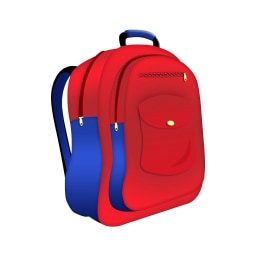
bag
Tap card to see the picture again.
Common questions
Why do early decoders confuse short a, short i, and short u?
Short a (/æ/), short i (/ɪ/), and short u (/ʌ/) represent the three lax vowel anchors of early reading. When words share identical onset and rime consonants (like bag, big, and bug), children often rely on the outer consonants (/b/ and /g/) to guess the word instead of processing the center vowel.
How can children physically feel the difference between short a, short i, and short u?
Use the "Chin Drop, Narrow Smile, and Relaxed Sigh" kinesthetic check. For short a (bag, rag), the jaw drops wide open while the tongue stays low and forward. For short i (big, rip), the mouth forms a soft, narrow smile with the tongue high and forward. For short u (bug, rug), the lips and jaw relax completely into a neutral position, releasing a gentle sigh (/ʌ/).
What word sets are included in this review lesson?
This lesson features two matching-onset contrast sets—bag/big/bug and rag/rip/rug—paired with real photographic cards to eliminate initial-consonant guessing and isolate the medial vowel sound.
Is the printable worksheet free to download?
Yes, the 4-page PDF worksheet pack is completely free and includes picture word cards, missing-vowel letter matching, handwriting trace-and-write lines, and picture-to-word drawing matches.
Start Learning with Bitsboard
Unlock over 30 interactive mini-games, thousands of pre-made learning boards, and the power to fully customize your own lessons. Perfect for toddlers, students, educators, and speech therapists!
Download on the
App Store