
When early readers transition from single word families into mixed decoding, the front vowels—short a (/æ/), short e (/ɛ/), and short i (/ɪ/)—present the highest frequency of auditory and reading substitutions.
Words like pen and pin, bed and bad, or pig and peg sound remarkably alike to young ears because all three vowels are articulated in the front of the mouth with only slight gradations in jaw drop and tongue height.
Without explicit contrast training, students often guess vowels based on initial consonants or context clues. A structured front-vowel discrimination routine trains learners to isolate the medial phoneme and orthographically map each word accurately.
The mechanics of front vowel articulation
To help young learners distinguish /æ/, /ɛ/, and /ɪ/, teach the physical sensations of vowel production:
- Short A (/æ/ as in cat, map, hat): The jaw drops lowest, opening the mouth wide with relaxed lips. Have students place a hand under their chin to feel the full drop.
- Short E (/ɛ/ as in bed, pen): The jaw rises to a mid-open position with relaxed tongue tension. The corners of the mouth pull slightly outward.
- Short I (/ɪ/ as in pig, pin, bib): The mouth is close to closed with the highest tongue elevation among the three front vowels, creating a subtle, gentle smile shape.
By teaching students to check their mouth shape in a mirror or feel their jaw movement, teachers and speech therapists provide an immediate tactile reference when decoding tricky vowel pairs.
Targeted minimal contrast word list
Our front vowel review set focuses on 8 high-frequency CVC words with unmistakable visual representations:
- Short A:
cat,map,hat - Short E:
bed,pen - Short I:
pig,pin,bib
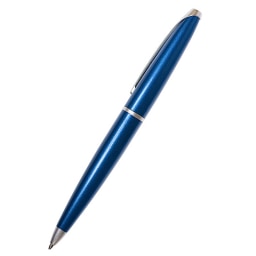
Comparing contrast pairs like pen (writing tool) and pin (sharp fastener) forces students to attend to the internal vowel rather than skimming past it.
Interactive digital practice on Bitsboard
Interactive screen-based practice accelerates vowel discrimination by providing instant auditory verification. On the CVC short a e i review games page, students interact with all 8 target words across four game modes:
- Flashcards: Tap to hear authentic native-speaker pronunciation while viewing red-highlighted medial vowels.
- Photo Touch: Listen to the prompt (e.g., "Find pin") and select the matching real-life photo from a grid of competing front-vowel choices (pen, pan, pin).
- Pop Quiz: Rapid multiple-choice word identification that builds reading automaticity under low cognitive load.
- Letter Match: Drag-and-drop letter tile spelling where students actively choose between a, e, and i to complete words.
Free 4-page printable worksheet pack
Bridge screen-based learning into pencil-and-paper mastery with the free printable CVC short a e i review worksheet.
The printable pack includes four printer-friendly, black-and-white and spot-color activities:
- Read and Match: 6 picture cards with bold word labels and sound tags for sorting and pocket chart drills.
- Trace and Write: Guided lined handwriting practice reinforcing left-to-right letter formation.
- Draw and Match: Fine-motor matching lines connecting photos directly to their printed words.
- Roll and Read: Interactive fluency dice game where partners roll, locate the corresponding row, and read the front-vowel CVC word.
High-impact 10-minute classroom routine
- Mirror Check (2 min): Have students say cat, bed, pig while observing their jaw movement in a handheld mirror.
- Auditory Sort (3 min): Call out words and have students hold up letter cards (a, e, or i) to indicate the vowel they heard.
- Bitsboard Games (3 min): Play one round of Photo Touch and Letter Match on the iPad or web browser.
- Worksheet Application (2 min): Complete one page from the printable pack for independent seatwork or center rotation.